Showing posts with label commodities. Show all posts

Sunday, April 27, 2025

April 7: The Day Global Risk Assets Bottomed: A Synchronized Reversal Across Stocks, Crypto, and Commodities


The conventional view serves to protect us from the painful job of thinking—John Kenneth Galbraith 

April 7: The Day Global Risk Assets Bottomed: A Synchronized Reversal Across Stocks, Crypto, and Commodities 

Following the April 7-8 lows, a synchronized rally swept across US, Asian or global stocks, commodities, and Bitcoin. Forget domestic interventions—this was a liquidity-driven comeback, sparked by global catalysts and market dynamics. 

I. Introduction 

On April 7-8, 2025, global markets teetered on the edge: Hong Kong’s Hang Seng cratered 13%, U.S. stocks wobbled, copper plunged 8%, and Bitcoin hit a yearly low. Fear ruled, with the VIX spiking to 46.98. 

Then, everything reversed course and headed higher through the next few weeks. 

From Tokyo to New York, stocks soared. Gold, oil, copper, and even Bitcoin joined the party. 

What sparked this global comeback? 

It wasn’t Chinese state buying or local policies. It was a liquidity tsunami, fueled by a massive global short-covering and capital rushing back to oversold assets. 

II. The Panic and the Spark


Figure 1

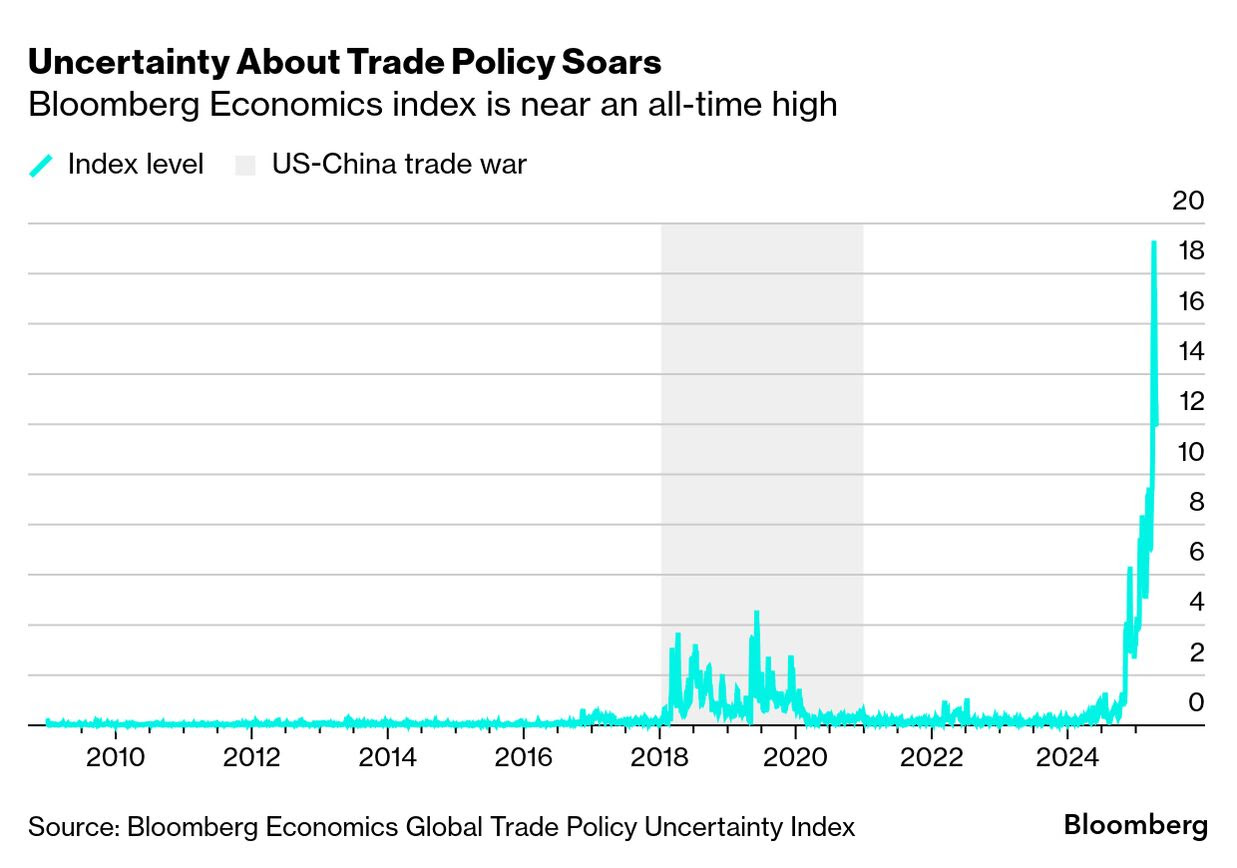
Concerns over the festering trade war, all-time high uncertainties, mounting geopolitical tensions in the face of a weakening global economy, and high systemic leverage put pressure on risk assets.   

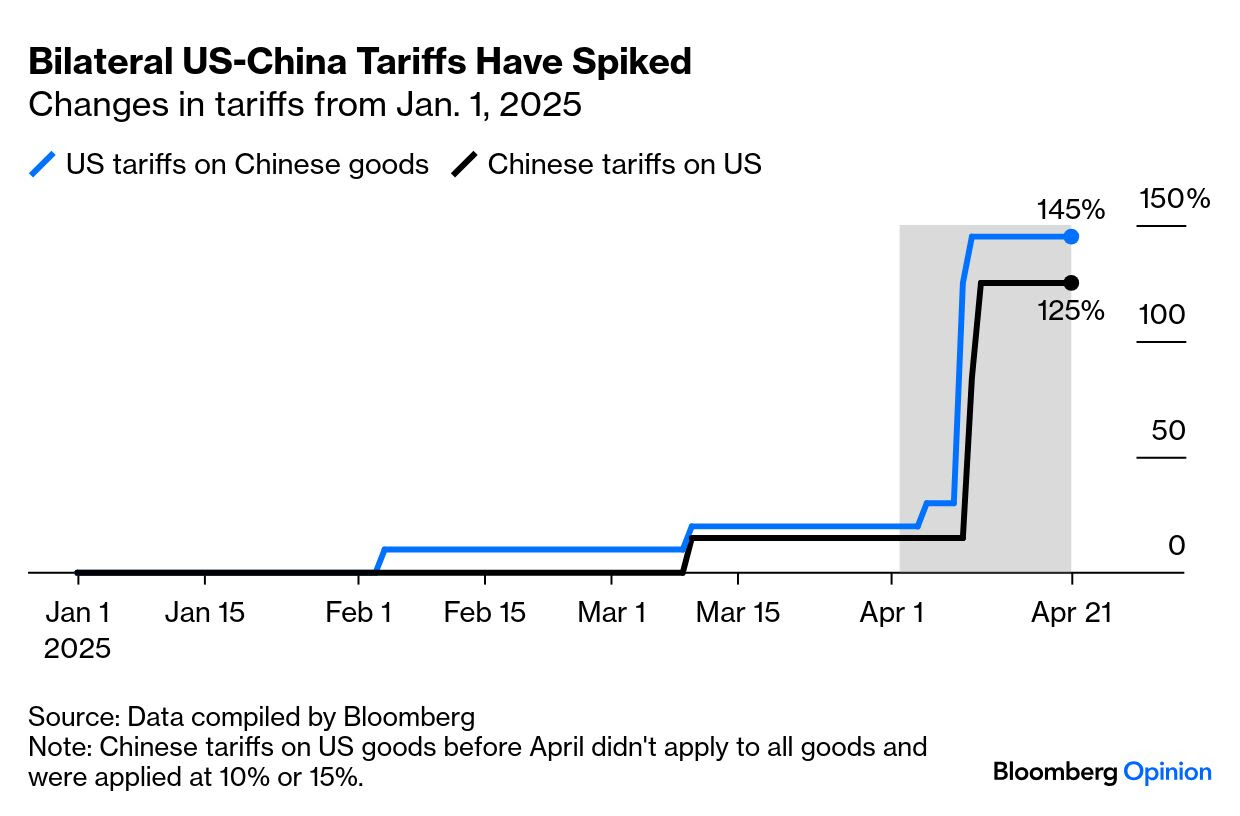
In charts, US-China bilateral tariffs soared in April.  (Figure 1)


Figure 2

The world’s government debt-to-GDP ratio remains high and is expected to rise further. (Figure 2, upper diagram) 

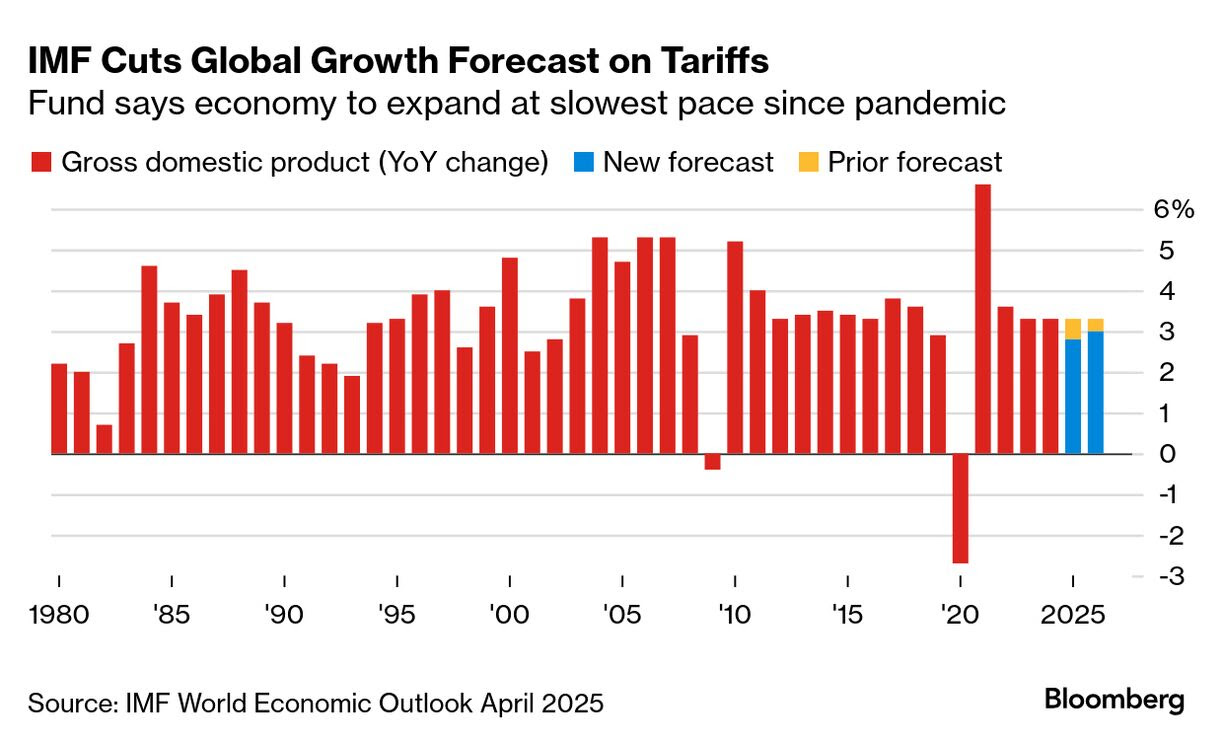
The IMF slashed its global GDP forecast from 3.3% to 2.8% in 2025 (Figure 2, lower image) 

Deflating prices, deleveraging, and liquidity tightening led to a risk aversion in global stocks, which culminated in April 7’s brutal selloffs. 

The Chinese yuan fell, or the US dollar-yuan USDCNY spiked, driven by China’s retaliatory tariffs. 

But late on April 7, rumors of a 90-day U.S. tariff pause (excluding China) surfaced, sparking a wild U.S. market swing (S&P 500 from -4.7% to +3.4%). 

Though denied, these rumors set the stage for April 8. 

III. April 8 Onwards: A Liquidity-Fueled Macro Short-Covering Rally 

On April 8, the selloff in some of the global markets had eased, and some had started a sharp recovery. 

Liquidity—fueled by institutional buying, short covering, and algorithmic trading—revived risk-ON sentiment.


Figure 3 

From the April 7-8 lows, the S&P Global Equity Index rebounded 11.2%, the US S&P 11.02%, and the Euro Stoxx 600 10.8% as of April 25th. (Figure 3, topmost pane) 

In Asia, China’s Shanghai Composite rallied 6.6%, while Hong Kong’s Hang Seng 50 surged 9.9%. (Figure 3, middle graph) 

Meanwhile, Southeast Asian bourses staged a massive recoil. Indonesia’s JCI surged 12.7%, Thailand’s SET 9.33%, and the Philippine PSEi 30 8.74%, over the same period. (Figure 3, lowest chart)


Figure 4

Strikingly, USD gold prices soared 12.1%, copper 20.2%, WTI crude 6.9%, and Brent crude 7.5% (Figure 4, upper window) 

The CRB Commodity Index advanced by 7.2%, while Bitcoin roared 28%. (Figure 4, lower visual) 

Risk-ON was suddenly back! 

The USDCNY spike U-turned and plunged, with China’s central bank selling dollars to slow the yuan’s fall, but this was secondary. (Figure 4, lower graph) 

I called this on my X.com post, "A macro short-covering rally." 

IV. Extreme Oversold Conditions 


Figure 5

The VIX nearly hitting 50 was a sign of extreme oversold conditions. Historically, this has proved to be a turning point. (Figure 5, upper chart) 

While past performance doesn’t guarantee future results, one thing is clear: liquidity re-emerged following oversold conditions, and the VIX metric may have been somehow validated. 

V. Why Liquidity, Not Local Policies 

Chinese state buying, PBOC intervention, and the BOJ’s yen-defense rhetoric were possibly too small to reinvigorate the world’s risk appetite. 

Yet, the rally’s timing, scale, and breadth—spanning stocks, commodities, crypto, and the yuan—points to a global liquidity flood, driven by tariff relief hopes, the Fed’s dovish narrative, and oversold conditions. 

VI. Takeaways: A Fragile Rally in a Fractured World 

Trump’s arbitrary and capricious policies (Tariffs or not) should sustain an ambiance of "regime uncertainty," which clouds economic calculation for the global economy. 

This is aside from geopolitical (e.g., latest India-Pakistan clash over Kashmir, the ongoing Israel-Palestine War, Russia-Ukraine War, US/Israel-Houthi War, frictions at South China Sea and Taiwan, et al.) and geoeconomic (US-China trade war) tensions. 

Trump’s backsliding against China has prompted Chinese media to make a mockery of his policies, which in the coming days could test his mercurial temperament. Rising markets may reanimate his belligerent trade and foreign policy stance. 

With Return on Investment (RoI) and "hurdle rates" indeterminate, investments will likely stall.  The financial world will likely chase short-term gains via the financial markets, which likely implies heightened volatility in the days to come. 

Easily, this ties to bear market rallies in stocks, which are often sharp and swift but fleeting. 

Furthermore, for a financial world increasingly dependent on central bank easy-money bailouts, mounting de-globalization dynamics, rising geopolitical and geoeconomic uncertainties, increasing risks of economic discoordination and disruptions, increasing leverage, volatile liquidity conditions, and escalating risks of stagflation will likely inhibit central banks from their traditional approach—all of which may reduce the likelihood of fuel for a financial market "blowoff." 

Lastly, aside from gold, central banks and governments have lately been amassing Treasury Bills—a sign of a stampede for liquidity. The last time they hit this high was during the Great Recession (2007-2009). They surpassed the highs during the 2020 pandemic recession. (Figure 5, lower chart) 

All told, all-time high gold prices plus the second-highest official inflows to Treasury bills are likely signs of a coming global recession or a financial crisis.


Sunday, November 20, 2016

Chart Porn: The Chinese Yuan’s Mounting Dilemma

Epic history is in the making.

The Chinese yuan fell by another 1.1% this week to hit an eight year low.

Reports from mainstream media have constantly been implying that the yuan’s decline has been “designed”, “tolerated”, “controlled” or “premeditated” by Chinese government’s central bank, the PBoC.

However, evidences hardly seem to reinforce such claims.

Instead, the PBOC appears to be implementing interventions in its monetary-banking system which has resulted to what can be characterized as a whack-a-mole impact!

As the perspicacious ‘eurodollar’ analyst Jeffrey Snider at Alhambra Partners has repeatedly pointed out—where the PBOC attempted to fix the yuan, signs of stress erupted at China’s (or/and Hong Kong’s) interbank rates. And when the PBOC tried to restrain interbank rates, the yuan plunged. Hence, the whack a mole dynamic.


The chart above reveals of the progression of PBoC’s whack-a-mole effects from the PBoC’s actions.

Lately, the PBoC appears to have given up with controlling the yuan and or the SHIBOR.

So the pressures appear to be escalating in BOTH the yuan and the SHIBOR


And turmoil in the SHIBOR has not been limited to the very short term, but has spread throughout SHIBOR curve.


And similar stress can be seen in the above charts of the offshore yuan via Hong Kong’s HIBOR.

And all these have been occurring while the Chinese government’s treasury holdings of US Treasury have plunged…

http://www.zerohedge.com/sites/default/files/images/user5/imageroot/2016/11/06/20161116_chinatsy_0.jpg
Chart from Zero Hedge

From Bloomberg (November 17)

China’s holdings of U.S. Treasuries declined to the lowest level in four years, as the world’s second-largest economy runs down its reserves to support the yuan.

The biggest foreign holder of U.S. government debt had $1.16 trillion in bonds, notes and bills in September, down $28.1 billion from the prior month, according to U.S. Treasury Department data released Wednesday in Washington and previous figures compiled by Bloomberg. That’s the lowest level since September 2012.

https://assets.bwbx.io/images/users/iqjWHBFdfxIU/ikUx2itOR6ZE/v2/450x-1.png

And as the Chinese government continues to liquidate on its US Treasury holdings in order to shore up its domestic “dollar” requirements, such liquidations have only been manifested through plummeting foreign reserves.

Chinese foreign reserves tumbled by $45.7 billion to $3.12 trillion in October (Bloomberg November 7)

Yet underneath the intensifying pressures on the monetary and banking system has been the Chinese government’s addiction to credit…

https://assets.bwbx.io/images/users/iqjWHBFdfxIU/ipaC8aUsz0h4/v2/450x-1.png

…or runaway credit comes in the face of declining economic activities!

Even mainstream media and experts have come to be cognizant of its grave perils.

From Bloomberg: (November 16)

A nine-year credit expansion meant to protect economic growth has prompted numerous warnings of impending financial trouble. China’s debt-to-gross domestic ratio reached 247 percent after expanding at the fastest pace among Group of 20 nations, according to economists Tom Orlik and Fielding Chen at Bloomberg Intelligence; such sharp increases have been known to trigger crises in other countries, they say.

The Bank for International Settlements in September used data comparing credit and GDP to warn of looming risks in China.

“Targeting economic growth and continued heavy reliance on credit to support growth means that economic leverage is unlikely to abate soon,” said Cornish. “This will increase the risks for the financial sector.”

Of course, credit money (over $2 trillion annual) has to go or be spent somewhere.

If they haven’t flowed to the general economy, then just where have they been directed at?

Well, the short answer is that it has only been fueling one bubble after another.

It began with a colossal real estate bubble….

But spread to the stock market…

http://stockcharts.com/c-sc/sc?s=%24SSEC&p=D&yr=5&mn=0&dy=0&i=t94546853933&r=1479613464301

Then back to real estate today when the stock market bubble imploded in 2015.

And as these asset bubbles alternately billowed, a gargantuan bond bubble (Barrons August 26 2016) has likewise been inflated

China’s bond market has been on such an epic tear in recent weeks that the central bank is scrambling to curb speculation. The first sign came Wednesday, when the PBOC injected pricier 14-day repurchase agreements into the financial system for the first time since February. It also clamped down on unruly peer-to-peer lending. The steps are aimed at mopping up excess credit - especially the cheap, short-term kind - to refocus punters on longer-term investments. It’s a tacit confirmation that China has joined U.S. Treasuries, German debt and Japanese government bonds in bubble territory.

Dynamics in China could be the most troubling of all. At first, China’s debt boom seemed a piece of a global trend, one that picked up pace in January when the Bank of Japan joined the European Central Bank in engineering negative rates. Yet a rising number of mainland defaults should be driving credit spreads in the opposite direction. The same goes for regulatory crackdowns on credit and wealth-management products, moves that suggest growing alarm over threats to the national balance sheet.

Increasingly, though, banks have been plowing short-term borrowings normally used for daily cash needs into markets and offering it to investors. Much of it has flowed into bonds amid concerns about shaky stock values. The upshot has been a ramping up of leverage in the $8.5 trillion bond arena, as evidenced by 10-year yields in the neighborhood of 2.6%.

The bond bubble is another reminder of how painfully slow President Xi Jinping has been to recalibrate growth engines. While moves to swap debt for equity and securitizing bad loans garnered banner headlines, in practice they’ve just enabled politically-connected highly-indebted companies and local governments with bailouts. That also helps keep corporate yields down. Moral hazard risks, in other words, have only increased this year.

Also since stocks and bonds were not enough, the tidal wave of credit induced the Chinese to also indulge in manic speculations on commodities

From the Financial Times (April 27)

In the past month near mania has gripped China’s commodity futures markets with day traders and yield-hungry wealth managers pouring into a lightly regulated sector, often with astonishing results.

Daily trading volumes in some commodity futures contracts such as iron ore have been so large that sometimes they have exceeded China’s annual imports. Turnover in Shanghai steel futures one day last week eclipsed all of the shares traded on China’s equity markets.

Alarmed by the surge in trading, which has parallels with the lead-up to last year’s equity market meltdown, Chinese exchanges have moved quickly to increase transaction fees and margin requirements on future contracts to cool some of the speculative ardour.

While this has removed some of the froth from prices, it is not clear whether it will deter the new band of investors that turned away from equity markets after draconian rules were imposed last year. At the same time, Beijing wants to place China at the centre of global commodity markets with prices determined and settled in renminbi.

All of this could have far-reaching consequences for the way raw materials are priced and risks driving up the cost of commodities that are the building blocks of the global economy.
http://www.zerohedge.com/sites/default/files/images/user3303/imageroot/2016/05/12/20160513_commod6_0.jpg

Here is the titanic speculative ramp on commodities as shown in the updated chart provided by the Zero Hedge

Massive credit creation already implies of a weaker yuan. Add to these significant numbers of people who would want to move capital out of China. Such capital flight may be due to political conflicts or economic difficulties or concerns over the economic repercussions from asset bubbles or a combination thereof.

More importantly, economic predicaments translate to the deepening of financial system’s balance sheet ordeals, which have only magnified pressures from excessive (but still ballooning) indebtedness, particularly for US dollar liability exposures. Leverage based on wholesale finance adapted by the financial system has further compounded or aggravated on the system’s US dollar woes.

So all these have been expressive of mounting financial (bubbles) and monetary strains as the real economy struggles (or artificially inflated by trillions or a tsunami of credit)

Strains, incidentally, which seems to be compounding on China’s (as well as the world’s) “dollar shorts” conundrum.

And progressing strains has now been ventilated in the escalating plunge of the yuan and the coincidental-correlational spikes in interbank rates.

And it would appear that the PBoC has been left out in the cold.

As Mr. Snider warned

The PBOC no longer holds SHIBOR steady, but the results are the same. China found itself with only growing unrest to the point of chaos in its RMB markets due to the “dollar” and that disorder spread out in waves to other places around the globe. The processes and symptoms are all the same; a consistency you just won’t find in mainstream commentary. Again, as noted earlier, the “rising dollar” is a euphemism for a more acute “dollar” shortage, one that ebbs and flows. This looks more and more like another global “flow” – “dollar”, not Trump.

Once again, the seeming transmission process from the present periphery (China and emerging markets’ currency, bonds and precious metals) to the eventual core (developed economies).

Epic history is in the making.

PSEi 5,761: The Rotational Pump: When the Index Rises and the Market Doesn’t

  Central banks can, and do, intervene to prop up stock markets and failing institutions. In 2008, the government rescued or supported AIG, ...